
How can doctors and clinics save hours on daily ward round documentation and check medication safety automatically—without ever sending confidential patient data to the cloud?
With YPipe by iunera running 100% locally or on-premise inside the hospital network, physicians simply speak their bedside observations into a tablet or computer to generate structured clinical notes and medication orders. YPipe keeps every patient’s file strictly separated, checks prescriptions for dangerous drug interactions, allergies, and dosage limits, and guarantees full GDPR, HIPAA, and EU AI Act compliance.
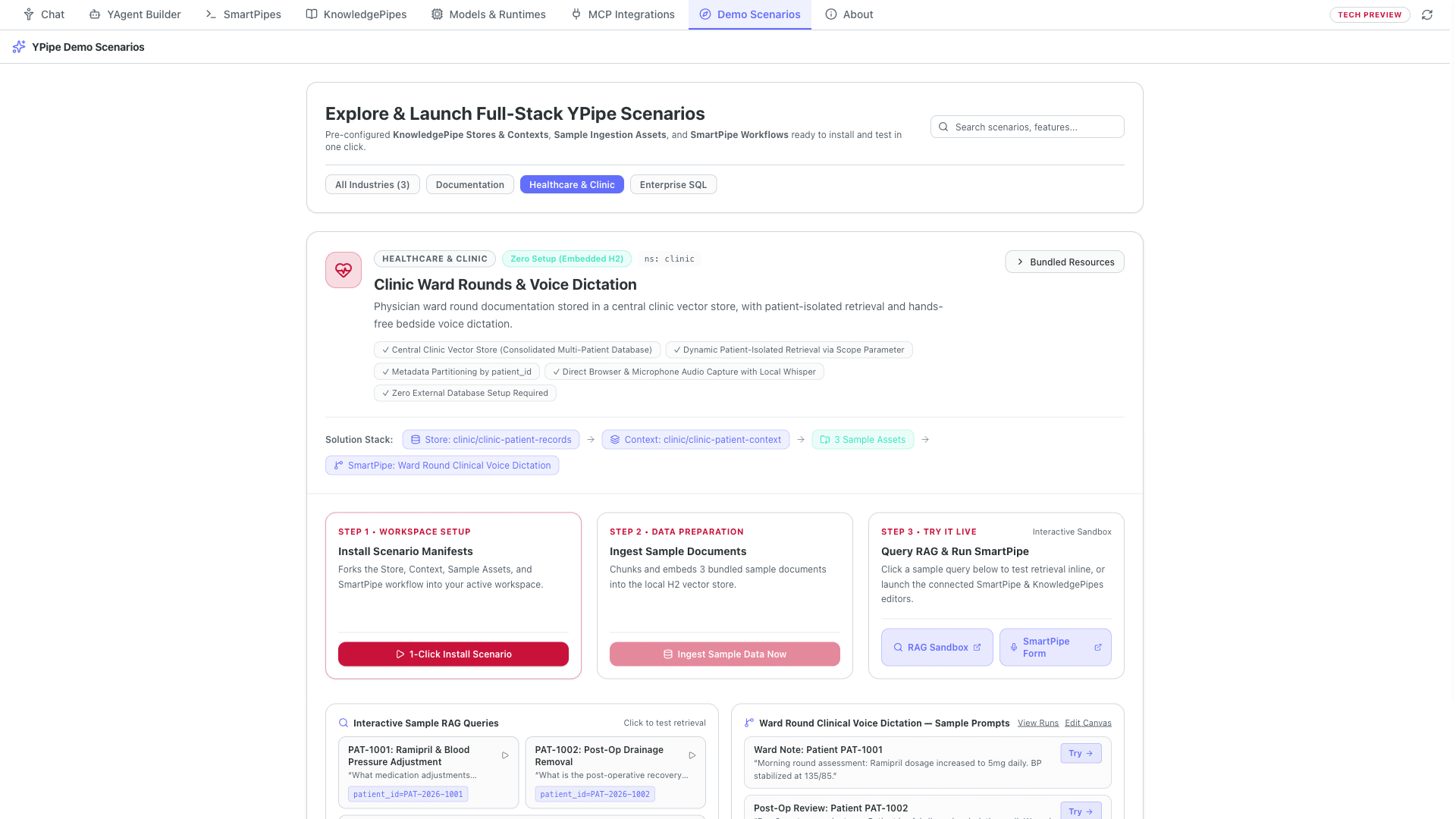
Table of Contents
- Key Takeaways
- Saving Physician Time on Ward Rounds Without Compromising Patient Privacy
- Hands-Free Bedside Voice Dictation to Structured Clinical Notes
- Strict Patient File Separation: Zero Cross-Patient Mix-Ups
- Automated Medication Safety, Allergy Alerts & Guideline Checks
- Cloud Medical Scribe vs. Manual EHR Typing vs. YPipe On-Premise Clinical AI
- Step-by-Step Walkthrough Inside YPipe
- Frequently Asked Questions
- Related Articles & Video Series
Key Takeaways
- Save Physician Time on Ward Rounds: Doctors dictate bedside observations directly into a tablet or workstation and receive structured medical notes and medication adjustments in seconds.
- 100% On-Premise Patient Data Privacy: Every voice recording and patient record stays inside the hospital or clinic—satisfying the strictest GDPR, HIPAA, and medical confidentiality standards.
- Strict Patient File Separation: Built-in patient scoping ensures that searching or summarizing one patient’s history never mixes in records from another patient.
- Automated Medication & Allergy Safety: Immediately surfaces documented patient drug allergies (such as Penicillin or Ciprofloxacin) and checks prescriptions for dangerous drug interactions, dosage limits, and clinical guidelines.
- Ready to Run Without Complex IT Projects: Installs in minutes on hospital computers or clinic servers with one-click healthcare templates.
Saving Physician Time on Ward Rounds Without Compromising Patient Privacy
Across hospitals, rehabilitation centers, and medical practices, physicians and nursing staff spend hours every day typing bedside ward round observations into electronic health records (EHR). While AI voice-to-text and clinical summarization can save hours of administrative burden, strict healthcare privacy regulations—including GDPR, HIPAA, and European medical confidentiality laws (Sovereign AI in Europe)—prohibit sending confidential patient audio and medical histories to external cloud AI services.
With YPipe by iunera, hospitals and clinics deploy a complete voice documentation, patient history, and medication safety assistant 100% on-premise on their own hospital servers or clinical workstations.
Hands-Free Bedside Voice Dictation to Structured Clinical Notes
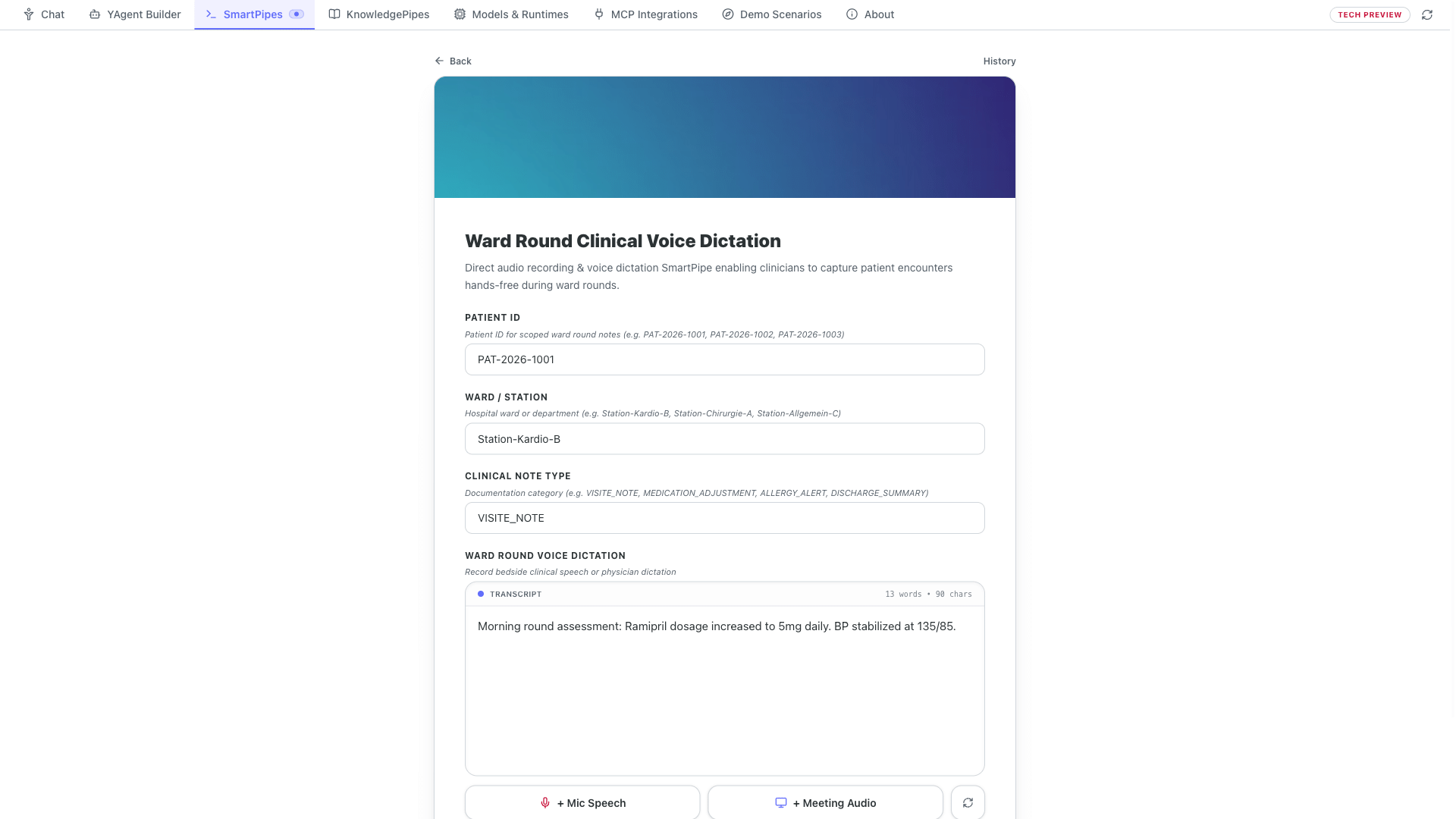
During morning ward rounds, a physician simply opens the Ward Round Voice Dictation form on a hospital tablet or workstation, selects the patient identifier, and speaks their bedside observations naturally into the microphone—for example, noting blood pressure stabilization and adjusting a daily Ramipril dosage from 5 mg to 10 mg.
YPipe transcribes the spoken observation on-premise and automatically formats the dictation into a clean, structured clinical progress note (`Subjective`, `Objective`, `Assessment`, `Plan`) and medication order without a single byte of patient data ever leaving the clinic network.
Strict Patient File Separation: Zero Cross-Patient Mix-Ups
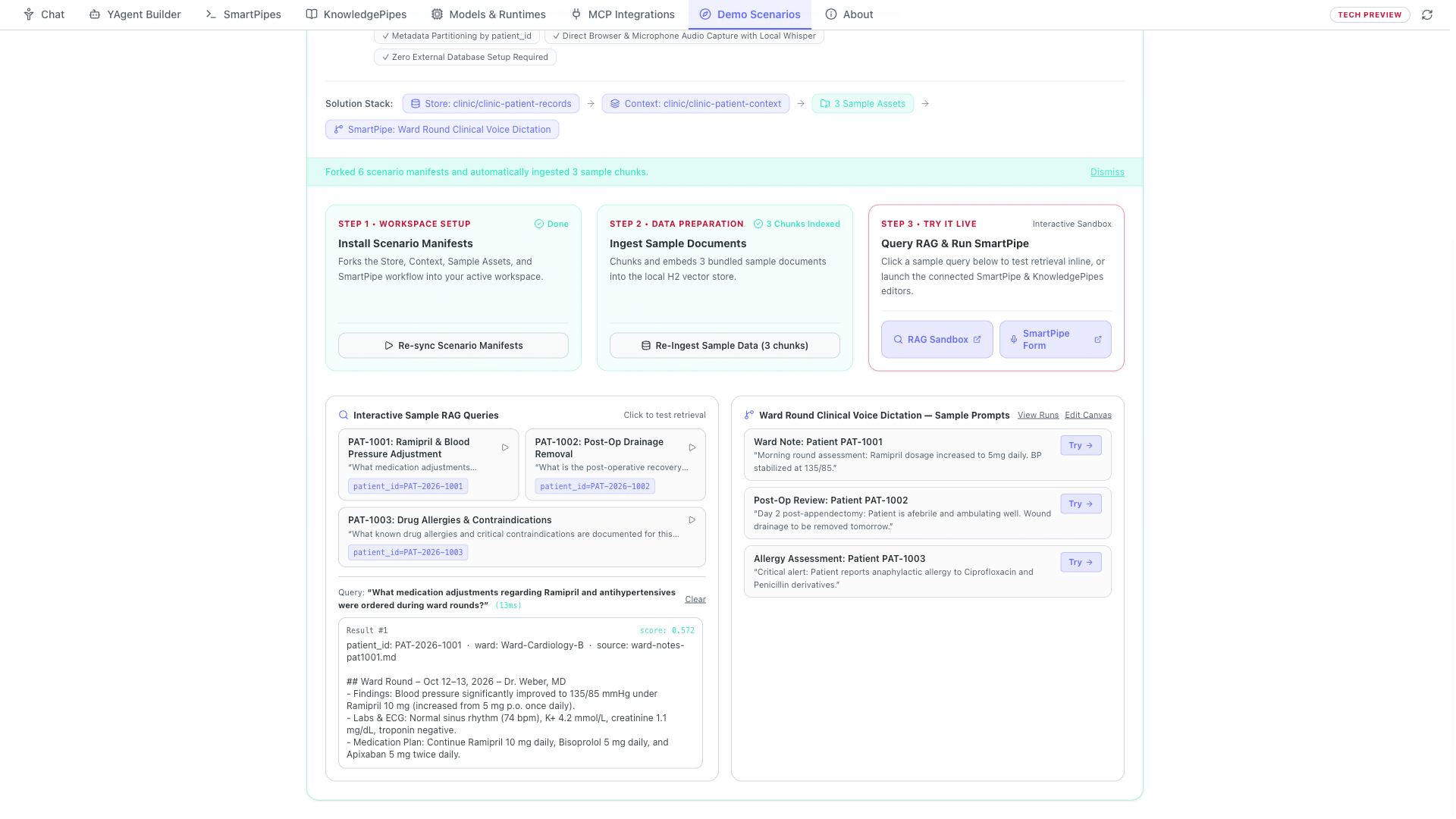
In clinical care, an AI assistant must never blend or confuse records from different patients. YPipe enforces strict patient file separation out of the box: when a physician reviews the latest ward round updates for PAT-1001, YPipe accesses only that patient’s file.
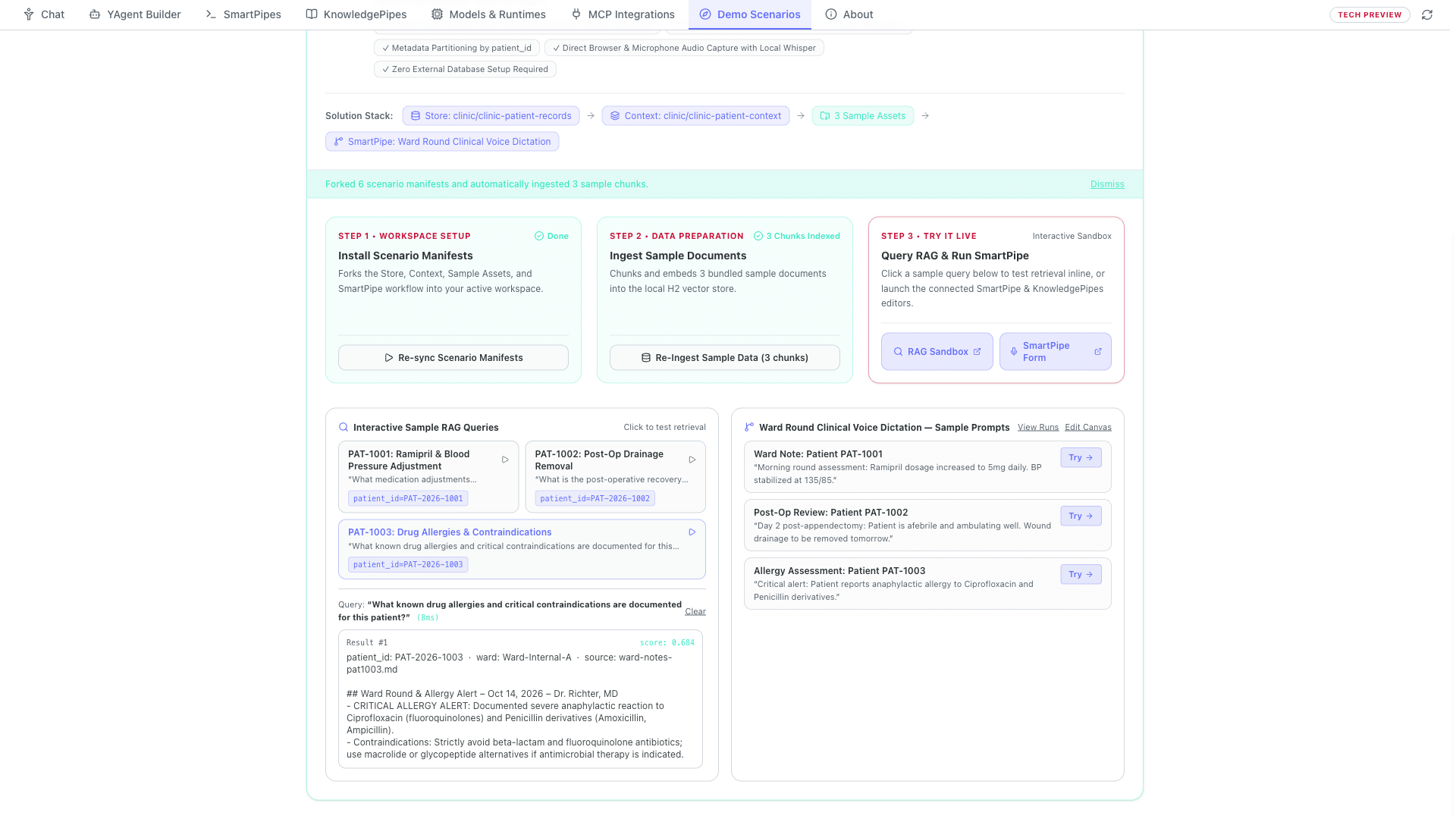
Switching to PAT-1003 immediately isolates retrieval to Patient 1003 and highlights their documented severe anaphylactic allergies to Ciprofloxacin and Penicillin—ensuring complete privacy and safety across every hospital bed.
Automated Medication Safety, Allergy Alerts & Guideline Checks
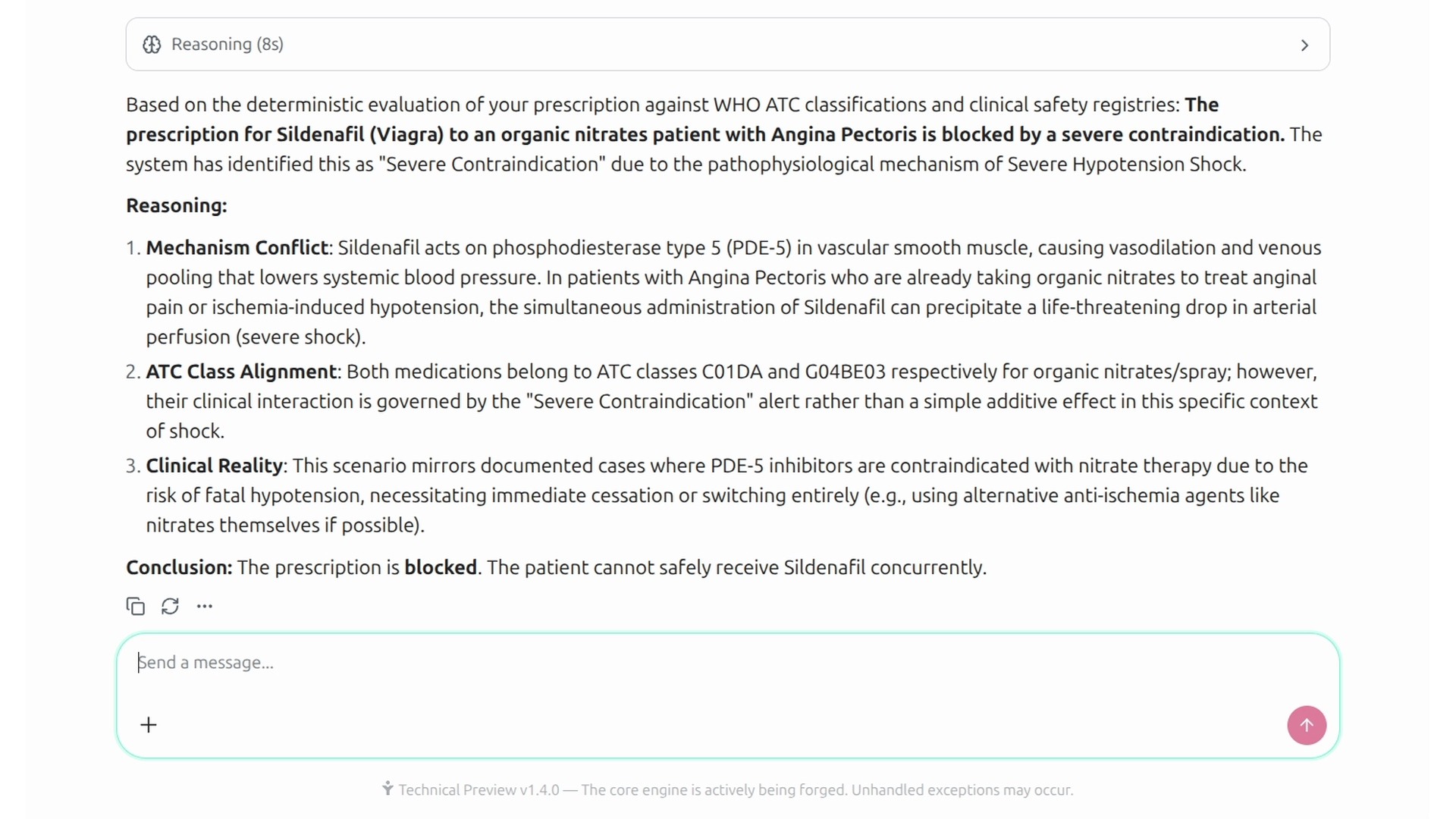
Beyond saving documentation time, YPipe protects patients by combining their chart history with the explainable medical safety rules of the ypipe Manifold Engine. When a clinician checks a proposed prescription—such as administering Sildenafil to a cardiac patient receiving Nitroglycerin—YPipe immediately blocks the order and explains the life-threatening blood pressure drop, while also verifying diagnostic criteria such as parathyroid surgical guidelines.
Cloud Medical Scribe vs. Manual EHR Typing vs. YPipe On-Premise Clinical AI
| Clinical Requirement | Cloud AI Medical Scribe | Manual EHR Typing | YPipe On-Premise Clinical AI |
|---|---|---|---|
| Patient Data Sovereignty (GDPR / HIPAA) | Uploads patient voice & notes to external cloud servers | Remains in hospital, but slow | 100% On-Premise inside the hospital network (zero cloud exposure) |
| Ward Round Documentation Speed | Fast, but requires cloud internet & BAA risk | 2–3 hours of manual typing per physician daily | Instant hands-free voice dictation to structured SOAP clinical notes |
| Cross-Patient Record Isolation | Shared cloud context risks prompt leakage | Manual chart switching | Strict per-patient file lock (zero cross-patient mix-ups) |
| Allergy & Drug Contraindication Checks | Probabilistic LLM guesses | Manual lookup in drug tables | Deterministic Manifold Engine blocks dangerous interactions & overdoses |
Step-by-Step Walkthrough Inside YPipe
Step 1: Healthcare & Clinic Scenario — 1-Click On-Premise Ward Rounds Setup
In hospitals and medical clinics, physicians spend hours documenting bedside ward rounds, yet strict GDPR and HIPAA regulations prohibit sending sensitive patient audio to external cloud AI providers. With Y-Pipe’s Healthcare Scenario, you can deploy a one hundred percent local or on-premise clinical documentation and retrieval system in seconds.
Step 2: Hands-Free Bedside Voice Dictation — Patient PAT-2026-1001
During morning ward rounds, a clinician opens the Ward Round Voice Dictation web form on a hospital tablet or workstation. Selecting Patient 1001, the doctor dictates bedside observations directly into the microphone — such as adjusting Ramipril dosage to five milligrams daily after blood pressure stabilization.
Step 3: On-Premise Clinical Pipeline — Whisper, LLM SOAP & RAG Sink
Behind the scenes, the Smart-Pipe workflow processes everything locally or on-premise on your clinic’s own servers. On-premise Whisper transcribes the physician’s voice recording, an on-premise language model structures the clinical assessment and medication orders, and the Knowledge-Pipe RAG Sink indexes the note into the central clinic Store, partitioned by the patient’s unique identifier.
Step 4: Patient-Isolated Retrieval & Manifold Engine Clinical Diagnostics
When reviewing patient history, Y-Pipe enforces strict patient-isolated retrieval through a scoped Knowledge-Pipe Context. Querying medication adjustments for Patient 1001 retrieves only that patient’s antihypertensive records. Switching the scope parameter to Patient 1003 immediately isolates documented anaphylactic allergies to Ciprofloxacin and Penicillin, preventing cross-patient data leakage. And by combining this patient-isolated context with the explainable Manifold Engine diagnostics from our second video — such as WHO ATC contraindication checks, cumulative posology safety, and guideline-verified differential diagnosis — clinicians can run deterministic medication safety and diagnostic verification completely on-premise.
Step 5: Partitioned On-Premise Clinic Store — SpEL Metadata Isolation
Because all records reside in a single consolidated on-premise Store partitioned by declarative metadata filters, hospitals and clinics achieve zero external cloud exposure and complete medical data sovereignty.
Frequently Asked Questions
Does YPipe send any patient voice recordings or medical notes to the cloud? No. Every voice recording, transcription, patient history lookup, and medication safety check runs 100% locally on the hospital’s own workstations or on-premise servers.
How does YPipe help doctors during daily ward rounds? Doctors speak their bedside observations into a tablet or computer microphone, and YPipe automatically transcribes the audio and structures it into a standardized clinical note and medication update.
How does YPipe prevent mixing up records between different patients? YPipe locks each clinical view to a single patient identifier (such as PAT-1001 or PAT-1003), guaranteeing that queries for one patient can never access another patient’s records.
Can YPipe alert clinicians to patient drug allergies? Yes. When reviewing a patient’s chart before prescribing, YPipe immediately surfaces documented drug allergies—such as Penicillin or Ciprofloxacin anaphylaxis—from the patient’s file.
How does YPipe check for dangerous drug interactions? The ypipe Manifold Engine evaluates proposed prescriptions against pharmacological contraindication rules (such as Nitrate + Sildenafil hypotension shock) and cumulative daily dosage limits.
Is YPipe compliant with European GDPR, HIPAA, and hospital data protection rules? Because YPipe operates entirely on-premise without external cloud sub-processors, hospitals retain 100% sovereignty over patient health information.
Can YPipe run on standard clinic computers without expensive GPU servers? Yes. YPipe’s Auto-Gear technology sizes compact models (starting at 800M parameters) to run smoothly on standard clinic laptops and desktops as well as hospital servers.
How can a hospital or clinic request a live evaluation of YPipe? Hospital IT and clinical leadership can visit ypipe.com or iunera.com to request an on-premise evaluation build and tailored clinical demonstration.
Related Articles & YPipe Video Series
YPipe by iunera is The Sovereign Local-First AI Platform—running 100% locally on workstations or on-premise on your enterprise and clinic servers with full GDPR, HIPAA, and EU AI Act sovereignty. Explore our related engineering studies on Kraken and the full video series below:
Related Kraken Articles on YPipe & Local AI
- Sovereign AI in Europe: Why Enterprises Need More Than Consumer AI Platforms
- The Hidden Data Leakage Risk of MCP Servers
- Agentic Loops Explained: Why Modern AI Is No Longer Just a Model
- Why Running a Local LLM Does Not Give You an AI System
Explore All Episodes in the YPipe Video Series
- Episode 01: YPipe — The Sovereign Local-First AI Platform | Manifold Engine, MCP, SmartPipes & On-Premise RAG
- Episode 02: Re:Think Local AI — 800M Qwen 3.5 & YPipe Manifold Engine: Tool Calling & Reasoning on Laptops
- Episode 03: YPipe SmartPipes — Visual Multi-Model AI Workflows (Whisper, Vision OCR, REST Webhooks & MCP Tools)
- Episode 04: YPipe KnowledgePipes — Declarative Local & On-Premise RAG | Vector DBs, SQL & Scoped Contexts
- Episode 05 (This Article): Private AI for Hospitals & Clinics — Voice Ward Rounds, Patient Privacy & Drug Safety in YPipe
Official YPipe Resources
- Official YPipe Website: https://ypipe.com
- iunera Company Website: https://www.iunera.com
- GitHub Repository: https://github.com/iunera/ypipe
- Full YouTube Video Series Playlist: https://www.youtube.com/playlist?list=PLIB7VtTuXX3Y