
Large Reasoning Models (LRMs)—such as OpenAI's o1/o3 and DeepSeek-R1—use Reinforcement Learning (RL) to generate thousands of internal Chain-of-Thought (CoT) "thinking tokens" before answering. While this test-time token search improves performance on familiar math and coding templates, empirical studies—most notably Apple Machine Learning Research's The Illusion of Thinking (arXiv:2506.06941) and Prof. Subbarao Kambhampati's LLM-Modulo research (arXiv:2402.01817)—prove that token scratchpads still operate via statistical next-token prediction, suffering a complete 0% accuracy collapse past a critical complexity threshold. Neuro-Symbolic AI eliminates this collapse by pairing a compact neural parser with an explicit, deterministic Symbolic World Model on the CPU.
iunera releases open-weights ypipe/gliner-neuro-symbolic-extractor and a free Hugging Face CPU Space—built upon Knowledgator's GLiNER-RelEx—delivering single-pass 22 ms CPU/NPU INT8 Schema.org JSON-LD and clinical entity/relation extraction with 0% substring mutation and 148,085 docs/hr in pure Java 17+.
Large Language Models (LLMs) are hitting a structural ceiling governed by logistic growth and inward technological convergence. Because autoregressive transformers store world knowledge as lossy word-co-occurrence probabilities rather than explicit concepts and relations, scaling models larger yields diminishing returns—leaving fundamental flaws in multi-step logic, relational consistency, and factual verification unresolved.
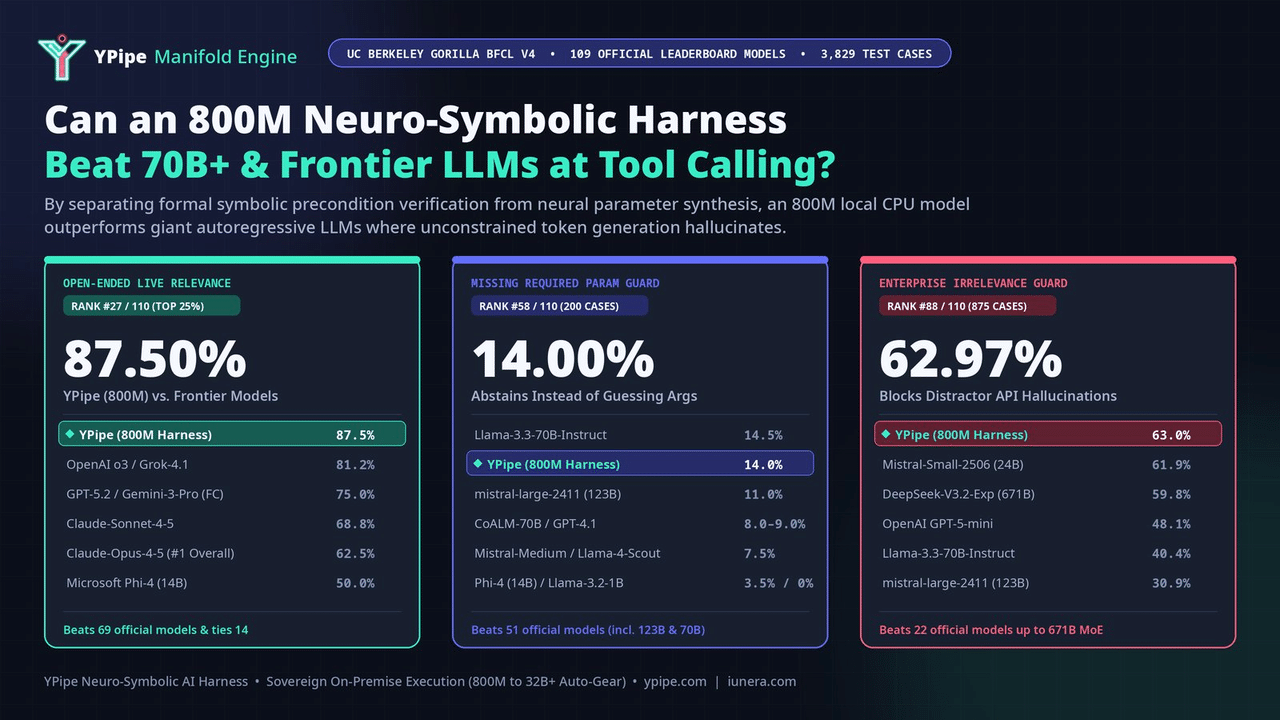
We benchmarked an 800M local CPU model inside the YPipe Manifold Engine against all 109 models on UC Berkeley's BFCL V4 (3,829 tests)—exposing where formal preconditions beat 70B+ and Frontier LLMs, how neuro-symbolic AI scales from 800M to 32B locally, and why cloud AI IPOs are a data-collection play.
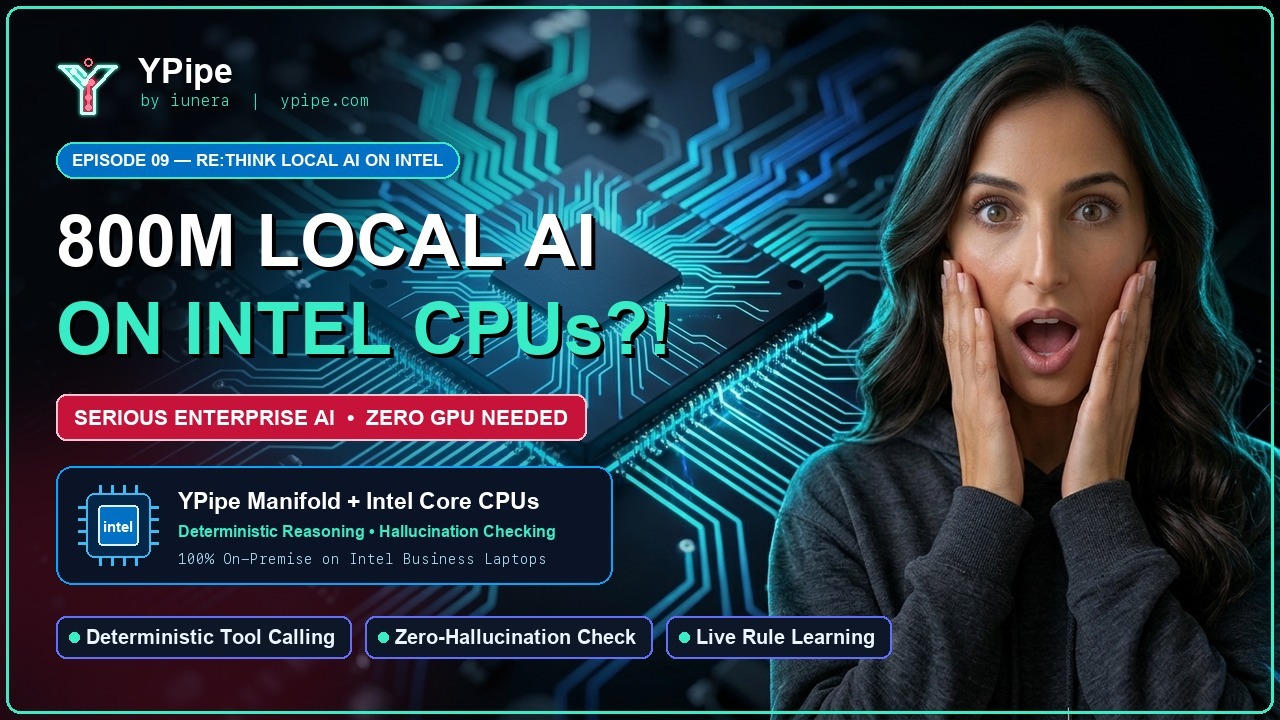
Can Local AI on Intel Core run serious, multi-step enterprise AI with zero discrete GPU? Run 800M local AI + YPipe Manifold Engine on standard Intel Core laptops for 7-step chained SQL, clinical & trade-secret verification, and live rule learning.
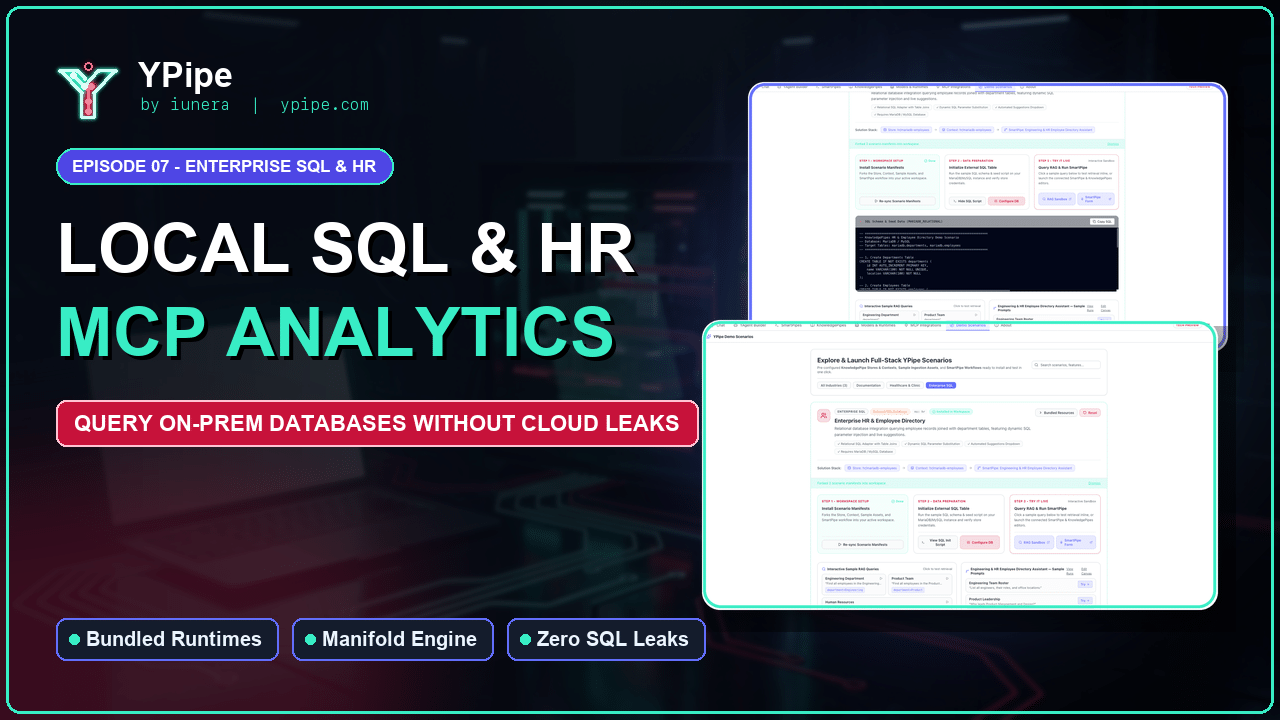
Connect HR, finance, and company databases to on-premise AI safely with YPipe using pre-approved read-only SQL lookups and department access locks.
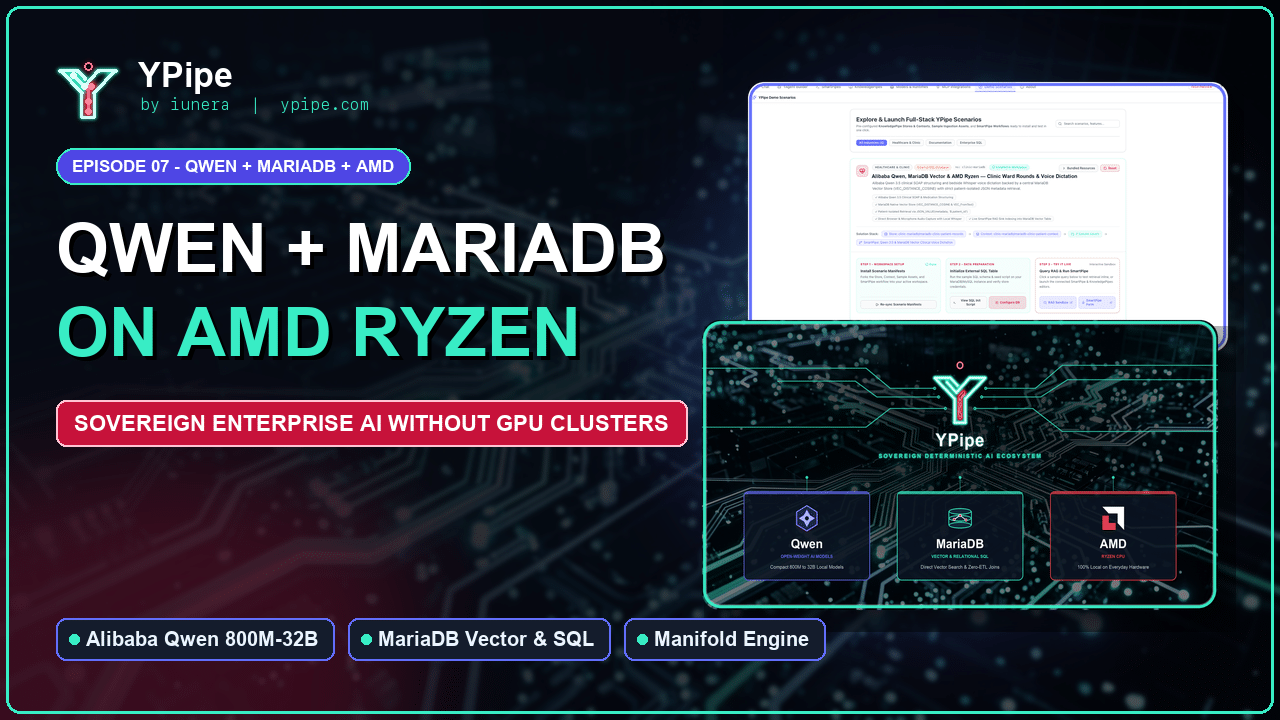
How YPipe by iunera unites Alibaba Qwen (800M–32B), MariaDB Vector & Relational SQL, and AMD Ryzen CPUs into a deterministic on-premise AI platform.
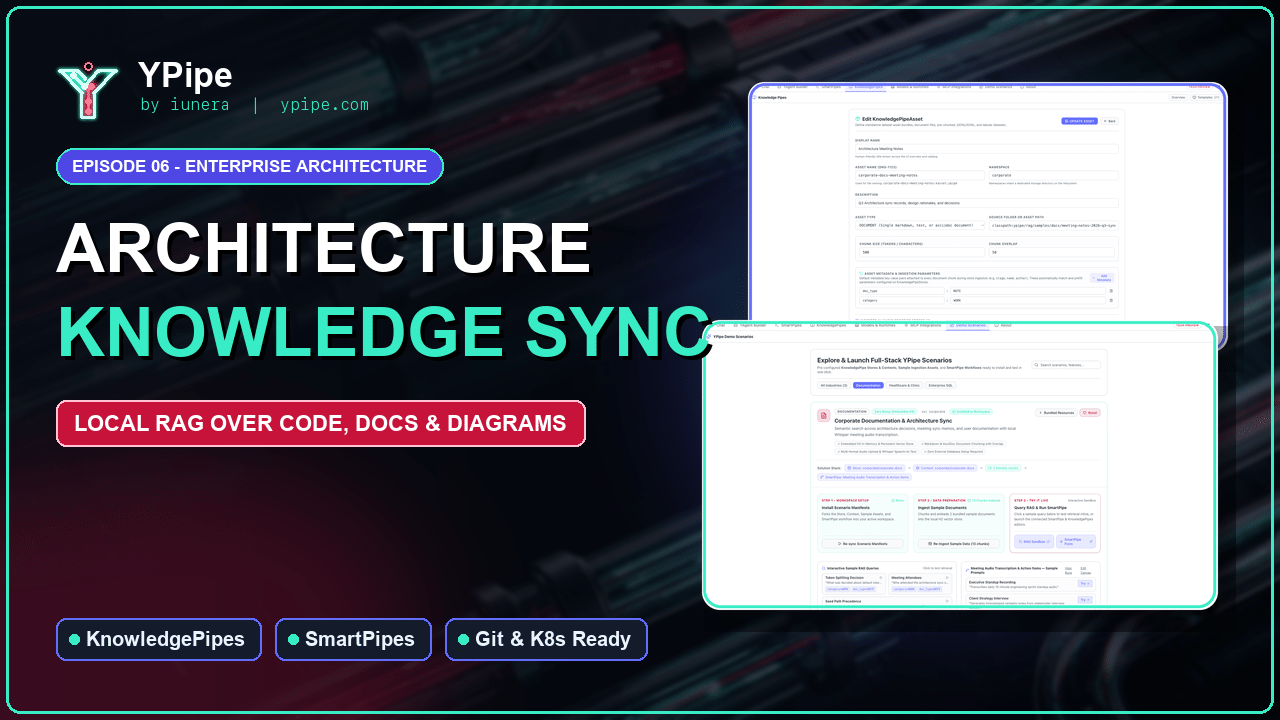
Record confidential board, R&D, and strategy meetings 100% on-premise with YPipe by iunera. Turn audio into searchable minutes with zero cloud risk.
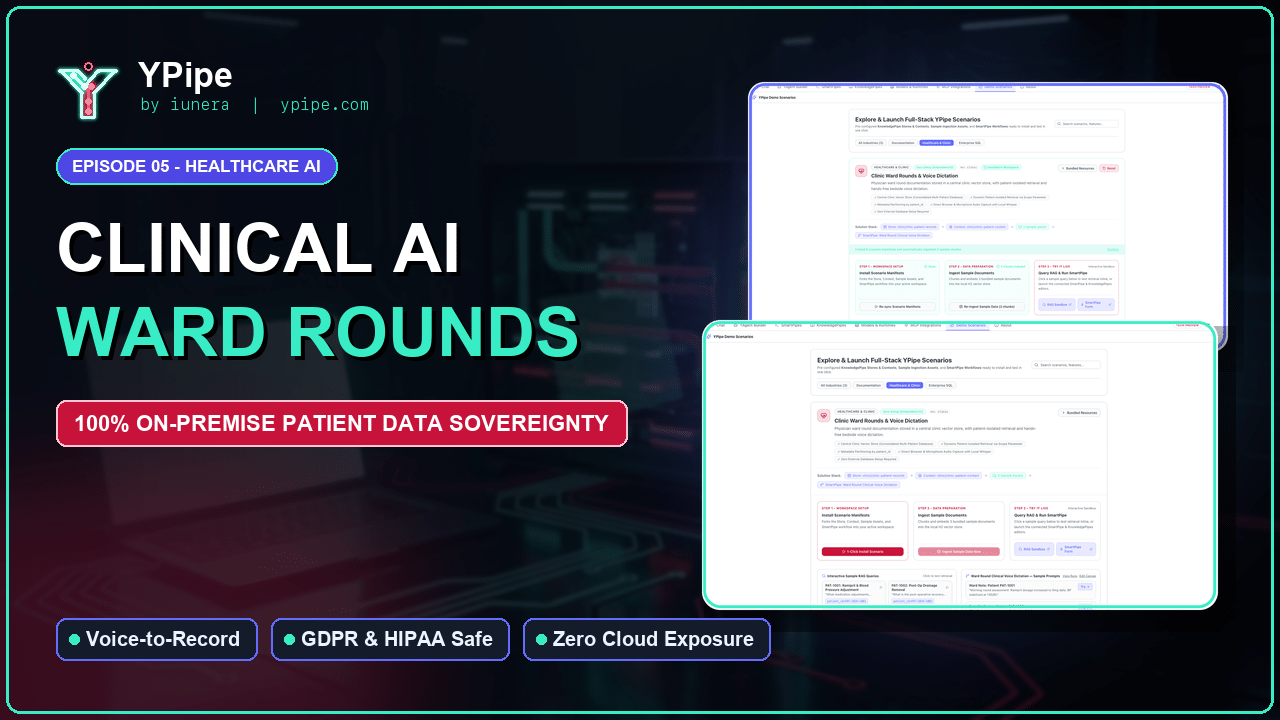
See how hospitals and medical clinics use YPipe on-premise for bedside voice ward rounds, strict patient file isolation, and automated drug safety checks.
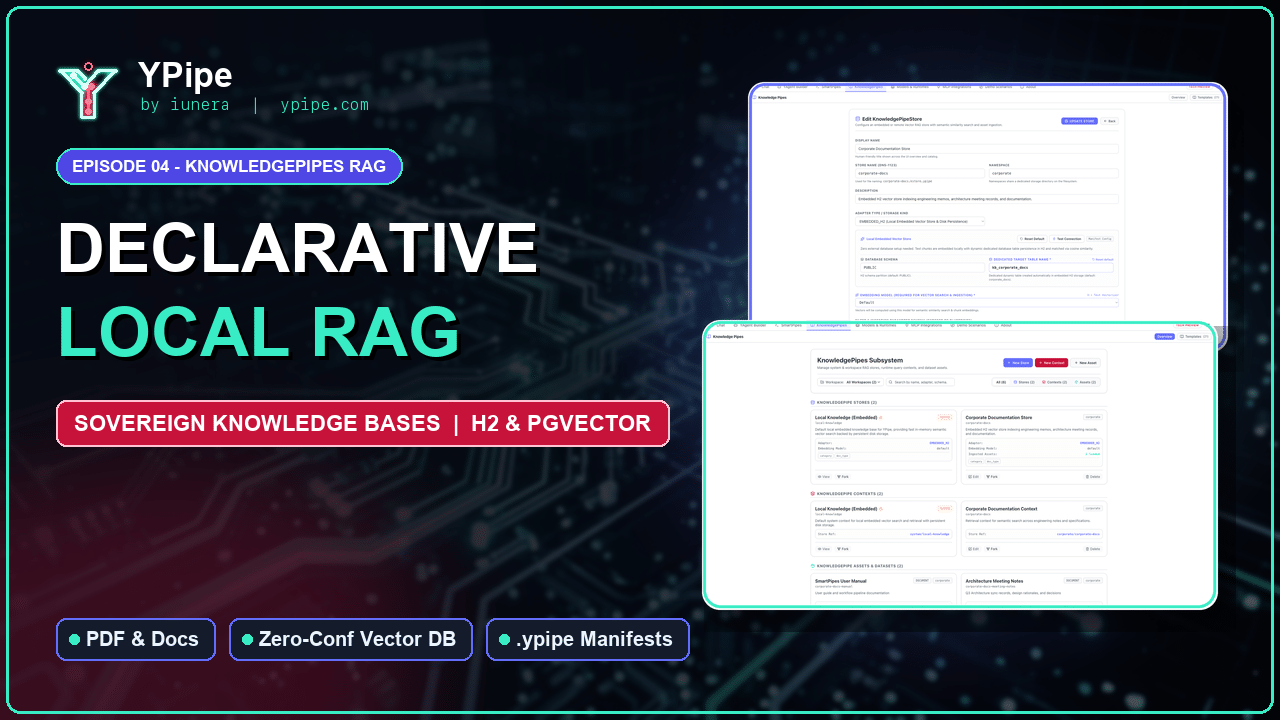
Discover YPipe KnowledgePipes: declarative local & on-premise RAG combining H2, PostgreSQL pgvector, MariaDB, Zero-ETL SQL, and Scoped Contexts.