
Meta Description: The EU AI Act demands more than local inference. Discover why Ollama and vLLM alone fall short for enterprise AI compliance and how Ypipe fills the governance gap.
Target Keywords: EU AI Act compliance, local AI deployment, enterprise AI governance, Ollama alternative, vLLM enterprise, AI audit logging, data sovereignty AI, MCP orchestration, local LLM compliance, AI workflow governance
Introduction: The EU AI Act Is Rewriting Enterprise AI Rules
The European Union AI Act is fundamentally changing how organizations design, deploy, and govern artificial intelligence systems. For years, enterprise AI discussions centered on model performance, inference speed, and cloud costs. Today, a far more critical question has emerged:
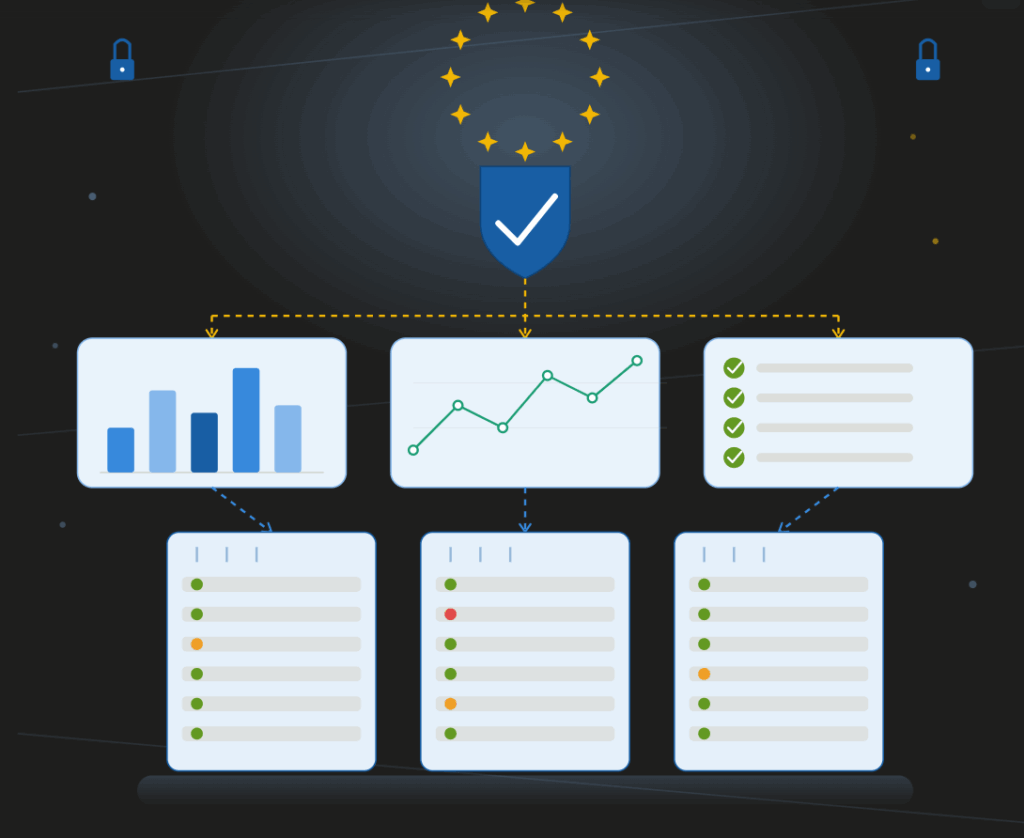
Can your AI system be governed, audited, and controlled?
As enterprises accelerate adoption of local AI deployments to strengthen privacy and data sovereignty, many IT and compliance teams assume that running models on-premise automatically resolves regulatory concerns. That assumption is dangerously incomplete.
Local deployment is only the first step. True EU AI Act compliance requires governance, traceability, and operational control that most local inference tools simply do not provide out of the box.
Why European Enterprises Are Racing Toward Local AI
The shift to local large language models is not accidental. Organizations across regulated European industries are increasingly evaluating on-premise AI for concrete, strategic reasons:
- Sensitive data stays inside corporate infrastructure, never traversing external networks
- Compliance with GDPR, the EU AI Act, and sector-specific regulations becomes more manageable
- Operational costs become predictable with no per-token cloud billing
- Dependency on third-party API providers is eliminated
- Business-critical workflows remain available even when external services go down
For financial institutions, healthcare providers, defense contractors, and public sector organizations, these advantages are not optional. They are requirements.
However, running a model locally and governing that model responsibly are two entirely different challenges. This distinction is at the heart of what the EU AI Act demands.
What Ollama and vLLM Do Well (And Where They Stop)
Tools like Ollama and vLLM have dramatically accelerated local AI adoption. They solve a genuinely hard problem: getting powerful open-source models running on enterprise hardware quickly.
| Capability | Ollama | vLLM |
|---|---|---|
| Local model inference | Yes | Yes |
| Open-source ecosystem support | Yes | Yes |
| Model serving API | Yes | Yes |
| GPU acceleration | Limited | Yes |
| Rapid experimentation | Yes | Yes |
| Audit logging | No | No |
| Workflow orchestration | No | No |
| MCP integration management | No | No |
| Enterprise governance controls | No | No |
| Compliance-ready deployment | No | No |
These platforms are excellent for running models. But running a model and governing a model are fundamentally different challenges, and the EU AI Act cares deeply about the latter.
What the EU AI Act Actually Requires From Your AI System
The EU AI Act is not primarily a technical specification. It is a governance framework. Regulators are not asking about your GPU utilization or token throughput. They are asking:
- Who used the AI system, when, and under what conditions?
- Which model version produced a specific output or decision?
- Can outputs be traced back to their origin for audit purposes?
- Was appropriate human oversight available and documented?
- Are risks identified, assessed, and actively managed?
- Can the organization demonstrate compliance during a formal audit?
These questions apply equally whether your model runs on AWS or on your own servers in Frankfurt. Data sovereignty is necessary but not sufficient. Governance is the missing layer.
The Compliance Gap Hidden in Most Local AI Architectures
The typical local AI deployment follows a deceptively simple pattern:
User Request > Ollama or vLLM > LLM Model > Response
This architecture works well for prototyping and internal experimentation. It fails enterprises that need to operate AI responsibly at production scale.
Audit Logging
Organizations subject to the EU AI Act need verifiable records of AI system interactions. Who sent a prompt? What was the exact input? What model responded? At what time? Under what system configuration? Without structured audit logs, answering these questions during a regulatory inspection becomes impossible.
Output Traceability
When an AI system contributes to a business decision, compliance teams must be able to trace that output to its origin. Which model version was active? Which prompt template was used? Which tools or data sources were involved in generating the response? Standard inference runtimes do not capture this information.
Workflow Governance for Agentic AI
Modern enterprise AI rarely consists of a single model answering a single question. Production systems increasingly involve:
- Multi-step agent workflows executing complex tasks autonomously
- Tool calling against internal databases, APIs, and file systems
- Model Context Protocol (MCP) integrations connecting AI to enterprise systems
- Chains of specialized models each handling distinct sub-tasks
Every step in these workflows must be observable, controllable, and documentable. A runtime that only manages inference cannot provide this.
Reproducibility and Deployment Consistency
A core compliance question is: Can your organization reproduce the exact same AI process six months from now during an audit?
Without versioned deployment definitions, configuration management, and workflow documentation, reproducibility is impossible. Most local AI runtimes offer no mechanism for this.
Why Enterprises Need an AI Orchestration Layer
This is the gap where many enterprise AI projects stall. Procurement teams evaluate Ollama and vLLM, correctly conclude they solve the inference problem, and then encounter a wall when compliance and legal teams start asking governance questions.
What enterprises actually need across the full AI operations stack includes:
- Model management: Controlled versioning, hardware-matched selection, and optimized runtime configuration
- Workflow orchestration: Defining, executing, and monitoring multi-step agentic processes
- Governance controls: Human oversight mechanisms, access controls, and policy enforcement
- Integration management: Standardized connections to enterprise databases, APIs, and legacy systems
- Audit infrastructure: Structured logging of all AI system interactions and outputs
- Deployment standardization: Repeatable, versioned configurations that can be validated and reproduced
The challenge for enterprises in 2026 is no longer simply running AI. It is operating AI responsibly, predictably, and in a way that withstands regulatory scrutiny.
Ypipe: Built for the Governance Gap

Ypipe was architected around a straightforward observation that most AI tooling ignores: running a model is only one part of enterprise AI operations.
Developed by iunera, Ypipe is a Java-native local AI client and MCP orchestration engine designed specifically for the operational and governance requirements of regulated enterprise environments.
What Makes Ypipe Different
Java-Native Stability Without Dependency Hell
Ypipe runs on Java, eliminating the Python environment fragility that plagues many AI deployments. No conflicting package versions, no virtual environment management, no runtime compatibility surprises. This matters enormously for enterprises operating in high-security environments, regulated industries, and professional DevOps pipelines where stability and auditability of the infrastructure itself is a requirement.
Self-Contained Inference With No External Dependencies
Unlike architectures that require separately installing and maintaining Ollama, vLLM, or other inference engines, Ypipe ships with fully built-in inference capabilities. Hardware-optimized execution for Apple Silicon (Metal), CPU, and Vulkan acceleration is configured automatically based on detected system resources.
MCP Orchestration as a First-Class Feature
Ypipe is built around the Model Context Protocol as its primary integration mechanism. The dedicated Couplings dashboard provides structured management of all MCP server connections, with fine-grained control over which tools are exposed, how they are named, and how they are described to models. This is governance infrastructure, not an afterthought.
Agentic Workflow Control
The Ypipe Gearbox enables intelligent model selection and routing across multi-step workflows. Rather than using a large 70B parameter model for every sub-task, organizations can route classification, OCR, summarization, and final synthesis to appropriately sized models. This reduces compute costs while maintaining a documented, reproducible workflow structure.
Headless Deployment for Audit Infrastructure
Ypipe supports headless operation as a background service, enabling it to function as an automated audit logging and plausibility checking layer within existing enterprise architectures. This directly addresses EU AI Act requirements for documentation and oversight.
Absolute Data Sovereignty
Every prompt, every context window, and every response stays on your hardware. There is no cloud routing, no telemetry, and no external API dependency. Ypipe is designed from the ground up for environments where data leaving the machine is not acceptable.
The Intelligence Switchboard: Matching Models to Tasks
One of the most practical governance challenges in enterprise AI is model selection. Using a large general-purpose model for every task is wasteful, but manually managing model routing adds operational complexity.
Ypipe addresses this through its built-in Agentic Gearbox, which automatically assesses your hardware (CPU, GPU, and RAM) and recommends appropriate models for each task type. Organizations can define workflows where:
- Small 800M to 3B parameter models handle classification, routing, and structured extraction
- Mid-size models manage document analysis and summarization
- Larger reasoning models handle final synthesis and complex decision support
This approach makes AI deployment accessible to teams without dedicated ML engineering resources, while maintaining the documented, repeatable structure that compliance frameworks require.
Kubernetes and Enterprise-Scale Deployment
For organizations operating at scale, Ypipe supports Kubernetes deployment for production AI infrastructure. This enables the same governance capabilities available in single-machine deployments to extend across distributed enterprise environments.
Combined with OpenAI API compatibility (allowing Ypipe to serve as a drop-in replacement for OpenAI-based tooling by redirecting the base URL), Ypipe integrates into existing enterprise AI stacks without requiring wholesale replacement of current tooling.
Getting Started With Ypipe
Ypipe is available as a Technical Preview with zero licensing cost for evaluation and production use during the preview period.
Quick start via JBang (no installation required):
jbang ypipe@iunera/ypipe
Platform installers available at ypipe.com:
- Windows: MSI installer or AppImage
- macOS: Apple Silicon DMG
- Linux: DEB (Ubuntu/Debian), RPM (RedHat/Fedora), or Tarball
- Universal: Executable JAR for any Java-enabled environment
Conclusion: The Future of Enterprise AI Is Governed AI
The EU AI Act signals a permanent shift in how enterprise AI will be evaluated, regulated, and trusted. The organizations that will succeed are not necessarily those with the most powerful models or the fastest inference pipelines. They will be those that can demonstrate governance, traceability, and operational control.
Local AI provides a strong foundation for data sovereignty. But local inference alone cannot satisfy the compliance requirements that the EU AI Act establishes. Enterprises need an orchestration and governance layer that makes AI systems auditable, reproducible, and controllable.
The conversation has moved decisively beyond where AI runs.
It is now about how AI is managed, how it is documented, and whether it can be trusted.
Frequently Asked Questions
What is the EU AI Act and when does it apply?
The EU AI Act is a comprehensive regulatory framework governing AI systems used in the European Union. High-risk AI applications face the most stringent requirements, including mandatory documentation, human oversight, and audit capabilities. Obligations have been phasing in since 2024 with full enforcement expected by 2026 and 2027.
Does running AI locally automatically make it EU AI Act compliant?
No. Local deployment addresses data sovereignty and some privacy requirements, but the EU AI Act also requires governance, traceability, audit logging, and risk documentation that local inference runtimes like Ollama and vLLM do not provide.
What is the Model Context Protocol (MCP)?
MCP is an open standard developed by Anthropic that allows AI models to connect to external tools, databases, and systems in a standardized way. Ypipe uses MCP as its primary integration mechanism for connecting local AI to enterprise systems.
How does Ypipe differ from Ollama?
Ollama is an inference runtime focused on running models locally. Ypipe is a full AI orchestration engine that includes inference, workflow management, MCP integration, and governance infrastructure. They solve different problems, and Ypipe is designed specifically for enterprise production deployments.
Is Ypipe free to use?
Yes, Ypipe is currently available as a free Technical Preview. Future commercial licensing tiers may be introduced as the product moves toward full production release.
Ypipe is developed and maintained by iunera. For enterprise consulting, custom deployments, or Kubernetes integration, contact the iunera architectural team directly.
Related resources: Ypipe Documentation | iunera Enterprise AI Consulting | Druid MCP Server