
Alibaba’s Qwen series has quietly become one of the most capable open-weight model families available today. Qwen3 surprised a lot of developers with its reasoning quality and instruction-following accuracy at smaller parameter counts. In the uncensored and “obliterated” variants, where alignment training has been reduced or removed, it has become a go-to choice for developers building local AI systems, private deployments, cybersecurity tooling, and agentic workflows.
But “go-to choice” does not mean “no tradeoffs.”
The discourse around uncensored models usually collapses into two camps: people who think removing safeguards is always dangerous, and people who think alignment is just corporate censorship dressed up as safety. Both camps miss most of the nuance.
So let us actually dig into what using Qwen Uncensored looks like in practice, the genuine advantages, the real problems, and the operational failure modes that rarely get talked about.
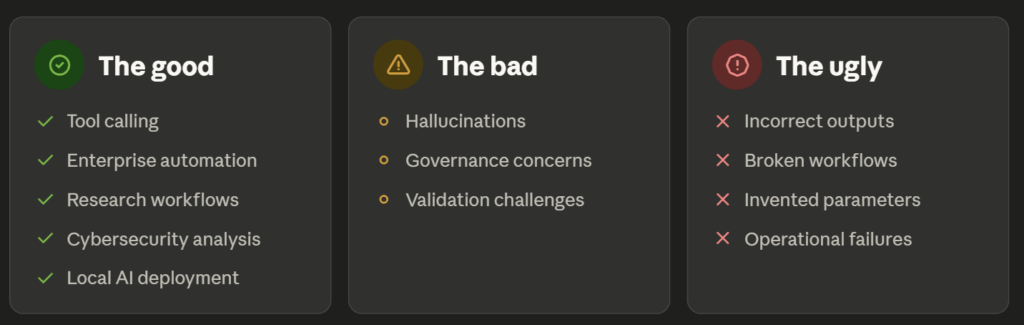
What “Qwen Uncensored” Actually Means
First, some clarity on what we are actually talking about.
Qwen Uncensored refers to modified versions of the Qwen base models where RLHF alignment tuning, refusal mechanisms, and safety training have been reduced or removed. The most common approach is “abliteration,” a technique documented by the open-source community on Hugging Face that surgically removes refusal behavior from model weights without requiring full retraining.
The goal in most legitimate deployments is not to generate harmful content. The goal is far more practical:
- A model that follows instructions without stopping to question them
- A model that executes tool calls without second-guessing every request
- A model that can assist with sensitive research topics without constant friction
- A model that runs privately, inside your own infrastructure, fully under your control
For organizations that have spent months fighting alignment-related refusals in cloud AI systems, that value proposition is genuinely compelling.
Popular Qwen uncensored variants are available on Hugging Face, built on Qwen2.5 and Qwen3 base weights. Most are quantized to GGUF format for local deployment via Ollama or LM Studio.
The Good: Why Developers Keep Coming Back
Dramatically Fewer Refusals
This is the headline benefit, and it is real.
If your team works in cybersecurity, threat intelligence, fraud investigation, or academic research on sensitive topics, you have almost certainly hit the wall where a cloud AI model refuses to engage with something completely legitimate in your professional context.
Qwen Uncensored removes most of that friction. Analysts can examine malware samples, discuss exploit mechanics, analyze attacker infrastructure, and review criminal typologies without the model pumping the brakes every other query. For workflows where refusals are the main bottleneck, the productivity improvement is immediate and significant.
Tools like VirusTotal and Hybrid Analysis exist precisely because security professionals need to handle this kind of content without friction. AI assistance in that context should work the same way.
Stronger Performance in Agentic Workflows
This is where Qwen’s underlying capability combines with reduced alignment to produce something genuinely useful.
In agentic frameworks like LangChain, AutoGen, or CrewAI, model cooperativeness matters a great deal. A model that hesitates, second-guesses, or refuses mid-chain breaks workflows in ways that are frustrating to debug and work around. Uncensored Qwen tends to be more willing to commit to actions, follow multi-step instructions, and continue chains without abandoning them.
Many developers building MCP-integrated pipelines report better results with uncensored Qwen than with aligned alternatives of comparable size, especially in long automation chains.
Research Without Constant Interruption
Academic and professional research frequently touches topics that consumer AI systems treat as sensitive, including biosecurity, disinformation, historical atrocities, extremist ideologies, and financial crime. In every case, the research purpose is legitimate. The alignment filter simply cannot tell the difference between a scholar and someone with bad intent.
An uncensored model running locally can engage with this material as a genuine analytical partner. Resources like MITRE ATT&CK and CISA advisories give you the structured data. Qwen Uncensored gives you the analytical layer to work through it without interruptions.
Privacy-First Deployment
One of the strongest use cases for any local model, and for Qwen specifically, is organizations that cannot or will not send data to external AI providers.
Governments, healthcare organizations, financial institutions, and legal teams all have data that belongs inside their own infrastructure. Running Qwen Uncensored locally means no API calls to external services, no data leaving the network, and no dependency on cloud provider uptime or policy changes. Frameworks like GDPR and HIPAA make this a hard requirement in many industries, not just a preference.
A Healthy Open-Source Ecosystem
Qwen has attracted substantial community attention, and that translates to real practical advantages. You get a wide selection of quantized variants, fine-tunes for specific use cases, tested configurations, and active forums where deployment questions get answered quickly.
Finding a Q4_K_M or IQ4_XS quantization of the latest Qwen model for your specific hardware is straightforward. That ecosystem health is itself a practical advantage that should not be underestimated when you are trying to move fast.
The Bad: Real Problems You Will Actually Hit
Hallucination Risk Goes Up
This is the tradeoff you cannot ignore, and it is the one most people underestimate when they first switch to uncensored models.
Well-aligned models are trained to express uncertainty, to hedge, to refuse when they are not confident, and to ask for clarification rather than guess. That uncertainty signaling is annoying when it fires on legitimate requests. It is genuinely useful when the model is about to confabulate something wrong.
Uncensored models suppress those signals. The result is a model that answers more, but sometimes answers incorrectly with the same confident tone it uses when it is right. Research on LLM calibration consistently shows that reduced alignment correlates with reduced calibration. The model’s expressed confidence no longer tracks its actual accuracy as well as it did before.
In low-stakes workflows, this is a nuisance. In workflows where accuracy matters, such as legal analysis, financial calculations, or security assessments, it is a genuine operational risk.
Governance Gets Harder
Most enterprise AI governance frameworks assume a degree of predictable model behavior. Compliance audits, model risk assessments, and documentation requirements all become easier when the model behaves consistently within defined parameters.
Uncensored models introduce more behavioral variability. The same prompt may produce meaningfully different outputs across runs, and the model may generate content that violates internal policies, not because it is doing anything wrong in an absolute sense, but because those internal policies were written with aligned model behavior in mind.
Organizations subject to SOX, HIPAA, GDPR, or financial services regulation such as FINRA and MiFID II need to think carefully about this before deploying. The NIST AI Risk Management Framework is a good starting point for building the governance layer around these deployments.
The Responsibility Transfer Is Real
When an aligned model does something problematic, some portion of the responsibility sits with the model developer. When an uncensored model does the same thing, that responsibility sits with the organization that chose to remove the alignment.
This is not hypothetical. It affects insurance, legal liability, and internal accountability structures. Teams that deploy uncensored models need to own monitoring, validation, logging, and governance controls that aligned model providers would otherwise handle. That is a real operational cost that should be factored into the decision upfront, not discovered later.
The Ugly: Failure Modes That Bite in Production
Invented Parameters in Tool Calls
This is where “more cooperative” quietly becomes a liability.
In agentic workflows, an uncensored model that will not refuse will also sometimes invent rather than stop. If a required tool parameter is missing from the context, an aligned model might halt and request clarification. An uncensored model might generate a plausible-looking value for that parameter and proceed as if everything is fine.
The workflow continues. The tool call executes. The output looks reasonable. The result is wrong.
This failure mode is particularly nasty because it is silent. There is no error message. There is no warning flag. The bad data just flows downstream until something breaks in a way that is very hard to trace back to an invented parameter three steps earlier. Berkeley’s Gorilla benchmark specifically tests this kind of function-calling accuracy, and the variance between models is significant.
Schema Hallucination in Structured Outputs
This is a subtler but pervasive problem in document processing and data extraction pipelines.
Send an uncensored Qwen model a receipt and ask it to extract structured data. There is a reasonable chance it returns not just the fields in the document, but fields it inferred should be there, including a tax amount it calculated, a category it guessed, and a payment method it assumed. All plausible. All presented with equal confidence. All fabricated.
From a semantic perspective, those additions might seem harmless. From a data integrity perspective, you now have invented values sitting in your database, and they got there quietly.
Libraries like Instructor and Pydantic help enforce schema boundaries, but the model will still try to exceed them if the enforcement layer is not present.
False Confidence on High-Stakes Decisions
The genuinely dangerous failure mode is not when the model says it is not sure. It is when the model is wrong and sounds completely certain.
A wrong answer with visible uncertainty is catchable. It triggers review. A wrong answer written in the same confident, well-structured, professional tone as every correct answer is much harder to catch, and far more likely to get acted on without proper scrutiny.
Research published in Science on AI-generated misinformation shows that fluency and confidence significantly suppress critical evaluation. The better the writing looks, the less carefully people read it. Uncensored models, optimized for engagement over calibration, tend to produce extremely fluent and confident output even when they are confabulating.
In invoice processing, contract review, medical summarization, or security assessment workflows, that is where operational failures actually happen in practice.
Honest Comparison: Qwen Uncensored vs Standard Models
| Area | Standard Aligned Models | Qwen Uncensored |
|---|---|---|
| Refusal rate | Higher | Significantly lower |
| Research flexibility | Restricted on sensitive topics | Open engagement |
| Tool calling cooperativeness | Good | Often better |
| Hallucination risk | Lower | Higher |
| Output calibration | Better uncertainty signaling | Overconfident on gaps |
| Schema adherence | More conservative | More likely to add fields |
| Governance complexity | Lower | Higher |
| Data privacy | Depends on cloud provider | Fully local |
| Community support and variants | Varies by model | Strong and active ecosystem |
The right call depends entirely on your use case, your risk tolerance, and the infrastructure you are prepared to build around the model.
Where Qwen Uncensored Actually Shines
These are the deployments where the tradeoffs clearly favor going uncensored:
- Cybersecurity and red team operations, where full engagement with exploit details, malware analysis, and attacker TTPs is required and refusals are direct workflow blockers
- Threat intelligence pipelines, where processing attacker infrastructure data, dark web reports, and IOC correlation needs to happen without content filters slowing everything down
- Private enterprise search, where internal documents contain information that consumer AI filters treat cautiously and local uncensored deployment removes that friction entirely
- Fraud and financial crime analysis, where analysts need to understand criminal methodologies in detail and hedging around those topics is counterproductive to the work
- Agentic automation, where multi-step workflows live or die on model cooperativeness and chain completion rates
- Academic research, where sensitive topics in legitimate scholarly contexts generate more noise than protection from consumer-grade filters
Where You Need to Be Careful
These deployments warrant additional caution and stronger validation infrastructure before you go live:
- Automated financial decisions, where hallucinated values in outputs carry real liability
- Healthcare summarization or triage, where false confidence on clinical details is a patient safety issue
- Legal document analysis, where invented citations or fabricated case details can have serious professional consequences
- Compliance reporting, where regulated outputs need human review regardless of how confident the model sounds
- Any pipeline without output validation, where uncensored models running unsupervised are a risk no matter how good the use case looks on paper
Making It Work: What Good Deployment Looks Like
If you have decided Qwen Uncensored fits your use case, here is how to do it properly.
1. Schema enforcement is non-negotiable. Use Instructor or Pydantic to validate every structured output. Do not rely on the model to stay within schema bounds voluntarily, because it will not always do so.
2. Write a real system prompt. Not “you are a helpful assistant.” Write explicit instructions about what to do when information is missing, how to signal uncertainty, and what parameters are and are not allowed. The system prompt carries significantly more behavioral weight in uncensored models than in aligned ones. Our article on system prompt engineering for uncensored models goes into this in detail.
3. Add a validation layer before downstream actions. Guardrails AI or NeMo Guardrails sitting between the model and your pipeline will catch a lot of what slips through at the prompt level.
4. Use RAG to ground your outputs. Retrieval-Augmented Generation significantly reduces hallucination by anchoring responses to verifiable source material. If the model can only respond based on retrieved documents, the confabulation surface shrinks considerably.
5. Log everything and monitor for anomalies. Tools like LangSmith give you observability into what the model is actually doing in production. Patterns of schema violations and unexpected field generation are detectable if you are watching for them.
6. Add human review on high-stakes outputs. Any output that feeds a compliance system, financial record, or decision with real consequences should have a human checkpoint. The model does the work. A person verifies it before it matters.
The Verdict
Qwen Uncensored is not a miracle. It is not a disaster waiting to happen either. It is a capable model with a specific set of tradeoffs that make it the right tool for some jobs and clearly the wrong tool for others.
For researchers, cybersecurity professionals, developers building agentic systems, and organizations running private AI infrastructure, it unlocks real capability that aligned models routinely block. That value is genuine and worth taking seriously.
But the freedom it offers is not free. Hallucination risk goes up. Governance gets harder. The responsibility for what the model produces moves from the model developer to your organization. The operational failures, including invented parameters, schema drift, and false confidence on wrong answers, are real and can be serious in the wrong context.
The teams that get consistently good results from Qwen Uncensored are not the ones who treat “uncensored” as a magic word. They are the ones who build proper validation infrastructure around it, write thoughtful system prompts, monitor outputs in production, and keep humans in the loop where the stakes are genuinely high.
That is not a limitation of the model. That is just what responsible deployment looks like in 2026.
Further reading:
- Qwen Model Family, Official Site
- Abliteration: Removing Refusals from LLMs, Hugging Face Blog
- Gorilla: LLM Function Calling Benchmark, UC Berkeley
- RAGAS: Hallucination Evaluation for RAG Pipelines
- Instructor: Structured Output Validation for LLMs
- Open LLM Leaderboard, Hugging Face
- LangSmith: LLM Observability by LangChain
- NIST AI Risk Management Framework
- EU AI Act, Official Text