
Meta Description: European enterprises are rethinking cloud AI dependency. Discover why sovereign AI is becoming a business requirement and how Ypipe enables local AI with full governance and data control.
Target Keywords: sovereign AI Europe, local AI enterprise, AI data sovereignty, EU AI Act compliance, cloud AI dependency risk, local LLM deployment, enterprise AI governance, data residency AI, on-premise AI, Ypipe local AI
The Question Reshaping European Enterprise AI Strategy
For years, cloud AI was the unquestioned default for organizations adopting artificial intelligence.
The advantages were obvious and compelling. Enterprises gained instant access to powerful models, elastic infrastructure, and continuous innovation without managing hardware. Whether through OpenAI, Anthropic, Google, or Microsoft, organizations could integrate AI capabilities with minimal operational overhead and no upfront infrastructure investment.
Today, the conversation is shifting fundamentally.
Across Europe, a growing number of enterprises are beginning to ask a question that cloud vendors rarely raise:
What happens if we no longer control the AI systems our operations depend on?
This question is at the heart of the sovereign AI movement, and it is no longer a theoretical concern. It is becoming a board-level strategic priority.
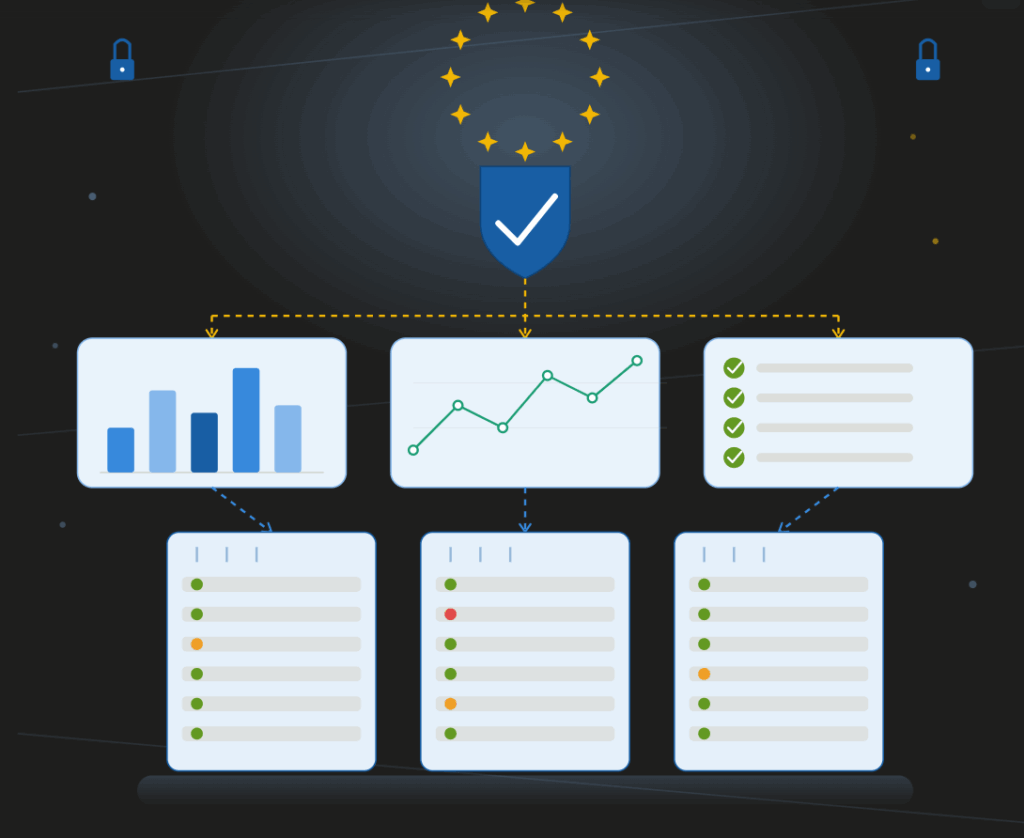
How Cloud AI Became a Critical Dependency
Most organizations adopted AI through cloud providers because it was the fastest, lowest-friction path to deployment. The consumption model was straightforward:
- Pay per usage with no capital commitment
- Access state-of-the-art models without infrastructure management
- Benefit from continuous updates and capability improvements
- Scale instantly based on demand
For experimentation and early adoption, this worked extremely well. It allowed organizations to validate AI use cases without large upfront investments.
However, as AI has moved from experimentation into core business operations, a structural dependency has formed. AI is no longer a productivity enhancement layered on top of existing processes. For many organizations, it has become operational infrastructure, as critical as the databases, ERP systems, and communication platforms the business runs on.
And unlike those systems, most enterprises have no contractual control over the AI infrastructure they now depend on.
The Operational Risk Nobody Talks About Loudly Enough
Enterprise AI conversations typically focus on familiar dimensions: cost, accuracy, model performance, and security. Far less attention goes to a risk that is quietly growing in significance: operational dependency on providers whose terms, pricing, and availability are entirely outside the enterprise’s control.
The exposure is real and multidimensional:
- A pricing change can immediately increase the cost of AI-dependent workflows by orders of magnitude
- A policy change can restrict which use cases are permitted, breaking existing integrations
- A service disruption can halt business processes that have no manual fallback
- A geopolitical development can restrict cross-border data flows, affecting organizations that assumed access would always be available
- A provider acquisition or strategic pivot can alter the terms under which an organization has built its AI infrastructure
For early-stage AI experimentation, these risks were largely theoretical. As AI becomes embedded in critical workflows, they become operational vulnerabilities.
Why Sovereignty Is Fundamentally About Control
Sovereign AI is frequently mischaracterized as a political or nationalist concept. In practice, it is about something far more pragmatic: organizational control over systems that have become business-critical.
Enterprises pursuing AI sovereignty are asking concrete operational questions:
- Where does data reside physically, and under which legal jurisdiction?
- Who controls access to AI capabilities and under what conditions?
- Who determines whether a specific use case is permitted?
- What happens to workflows and integrations if service terms change?
- Can the organization audit what the AI system is doing with sensitive data?
- Does the organization retain the ability to reproduce or explain AI outputs during a regulatory review?
These are not political questions. They are the same control and resilience questions that enterprises have applied to every other category of critical infrastructure for decades.
Why European Enterprises Face Unique Pressure
European organizations face a specific structural tension that makes sovereign AI particularly urgent.
On one side, there is a dense regulatory environment. The EU AI Act, GDPR, sector-specific regulations in financial services and healthcare, and emerging national AI governance frameworks all impose requirements around transparency, accountability, data residency, and audit capability. These requirements are becoming more demanding over time, not less.
On the other side, most major AI providers are headquartered outside Europe. Data processed through cloud AI services may transit or reside in jurisdictions with different legal frameworks, different government access rules, and different interpretations of what constitutes acceptable data handling.
The combination creates a compliance exposure that cannot be resolved through contractual arrangements alone. Many European enterprises are concluding that genuine compliance requires genuine control over where and how AI processes sensitive information.
Local AI Infrastructure: What It Actually Provides
Local AI deployment gives enterprises a fundamentally different operational model. Rather than consuming AI as an external service, organizations deploy and operate models within their own infrastructure. The practical benefits extend well beyond the political framing:
Data residency: Sensitive information, internal documents, customer records, and intellectual property stay within organizational infrastructure. No data transits external networks for AI processing.
Operational resilience: Critical AI workflows remain available regardless of external service availability, pricing changes, or policy shifts.
Cost predictability: Infrastructure costs are fixed and predictable rather than variable and subject to provider pricing decisions.
Regulatory clarity: When data does not leave the organization, data transfer compliance becomes significantly more straightforward.
Governance opportunity: Local deployment creates the foundation for the audit logging, workflow control, and access management that regulations increasingly require.
The strategic goal for most enterprises is not to replace cloud AI entirely. It is to build hybrid architectures that retain cloud AI for appropriate use cases while maintaining local control over sensitive workflows and critical business processes.
Sovereignty Requires More Than Infrastructure
This is where many local AI initiatives encounter an unexpected challenge.
The assumption is that deploying a model locally resolves sovereignty concerns. In practice, local deployment is the starting point, not the destination.
True operational sovereignty requires the governance layer that most local AI inference tools do not provide:
- Governance and access control: Defining which teams and users can access which AI capabilities under what conditions
- Auditability: Structured logs of AI system interactions that can withstand regulatory review
- Workflow management: Observable, repeatable agentic processes that behave consistently and can be reproduced
- Integration control: Governed connections between AI agents and enterprise systems rather than ungoverned ad hoc access
- Compliance infrastructure: The operational documentation that EU AI Act obligations demand
A local model running without governance infrastructure is still a sovereignty risk. The data may not leave the building, but the organization may still lack the visibility and control that regulators and auditors expect.
Ypipe: Sovereign AI With the Governance Layer Built In

Ypipe, developed by iunera, was built for exactly this challenge. It is a Java-native local AI client and MCP orchestration engine that treats data sovereignty and enterprise governance as foundational requirements rather than optional features.
Absolute Data Sovereignty by Design
Every prompt, every context window, and every AI response processed through Ypipe stays on the organization’s own hardware. There is no cloud routing, no telemetry, no external API dependency. The architecture is built from the ground up for environments where data leaving the machine is not acceptable.
This is not a configuration option or a compliance mode. It is the default, non-negotiable operating model.
Self-Contained Inference, No External Dependencies
Unlike local AI architectures that still depend on external inference runtimes like Ollama or vLLM, Ypipe ships with fully built-in inference capabilities. Hardware-optimized execution for Apple Silicon (Metal), CPU, and Vulkan acceleration is configured automatically based on detected system resources.
Organizations deploying Ypipe do not take on a dependency on a third-party inference service that could change, go offline, or introduce new terms. The intelligence runs entirely within organizational control.
Java-Native Stability for Enterprise Infrastructure
Ypipe is built on Java, fitting naturally into the server architectures, DevOps pipelines, and security environments that European enterprises already operate. No Python dependency management, no virtual environment conflicts, no runtime compatibility surprises across operating system versions.
For enterprises in high-compliance sectors where infrastructure stability is itself a governance requirement, this matters.
Governed MCP Integrations for Enterprise Connectivity
Through its Model Context Protocol Couplings dashboard, Ypipe provides structured, governed connections to enterprise systems including Apache Druid, PostgreSQL, MySQL, MariaDB, SQL Server, ClickHouse, SQLite, Nextcloud, LibreOffice, and local file systems.
Every integration is explicitly configured, with fine-grained control over which tools are exposed to AI agents. This means sovereign AI that can act on enterprise data without ungoverned access to enterprise systems.
Headless Deployment for Enterprise Architectures
Ypipe supports headless operation as a background service, enabling integration into existing enterprise infrastructure as an orchestration and audit logging layer. This supports the continuous monitoring and documentation requirements that EU AI Act compliance demands.
Kubernetes-Ready for Enterprise Scale
For organizations deploying sovereign AI at scale, Ypipe supports Kubernetes deployment. The same governance model available in single-machine deployments extends to distributed enterprise infrastructure.
The Business Case for Sovereign AI
The most compelling argument for sovereign AI is not ideological. It is the same argument enterprises have made about every other category of critical infrastructure dependency: resilience, control, and long-term operational independence.
Organizations have spent decades reducing single-vendor dependency in ERP, database, networking, and cloud infrastructure. The principle that emerged is consistent: when a technology becomes critical to operations, strategic control over that technology becomes a business requirement.
AI has crossed that threshold for a growing number of European enterprises.
The organizations that establish sovereign AI infrastructure now are building a foundation for:
- Regulatory compliance that does not depend on external providers’ compliance posture
- Operational resilience that survives market disruptions, pricing changes, and service outages
- Governance maturity that accelerates internal AI adoption by building trust
- Strategic independence that allows adaptation to evolving regulations without vendor-imposed constraints
Getting Started With Ypipe
Ypipe is available as a Technical Preview at no cost during the preview period.
Instant start via JBang:
jbang ypipe@iunera/ypipe
Platform installers available at ypipe.com:
- Windows: MSI installer or AppImage
- macOS: Apple Silicon DMG
- Linux: DEB (Ubuntu), RPM (RedHat), or Tarball
- Universal: Executable JAR for any Java-enabled environment
For Kubernetes deployments, legacy system integration, or sovereign governance consulting for regulated industries, contact the iunera architectural team.
Conclusion: Sovereignty Is a Business Requirement, Not a Political Statement
The future of enterprise AI is unlikely to be exclusively cloud-based or exclusively local. Organizations will build hybrid architectures that balance innovation velocity with operational control.
Cloud AI will continue to serve use cases where convenience and capability matter more than sovereignty. But for critical business processes, sensitive data handling, and regulated workflows, sovereign AI infrastructure is becoming a strategic necessity.
As European enterprises navigate the intersection of the EU AI Act, GDPR, and growing operational AI dependency, the organizations that build genuine control over their AI systems will be better positioned for whatever comes next, whether that is a regulatory change, a provider policy shift, or a geopolitical development that disrupts access to external AI services.
Sovereignty is no longer a political discussion.
It is a business requirement.
Frequently Asked Questions
What is sovereign AI and how is it different from regular local AI?
Sovereign AI refers to AI deployment where the organization retains full control over data, infrastructure, governance, and operational continuity. Local AI (running models on local hardware) is a component of sovereign AI, but true sovereignty also requires governance, audit capability, access control, and freedom from external operational dependencies.
Why are European enterprises particularly focused on AI sovereignty?
European organizations operate under strict regulatory frameworks including GDPR and the EU AI Act, while most major AI providers are headquartered outside Europe. This creates a tension between regulatory obligations and the practical reality of processing sensitive data through externally controlled AI services.
Does using local AI mean giving up access to powerful models?
No. Modern local AI platforms like Ypipe support models ranging from efficient 800M parameter specialists to 26B parameter reasoning architectures. The capability gap between local and cloud AI has narrowed significantly, particularly for enterprise-specific use cases that benefit from integration with internal data.
What is the difference between data sovereignty and AI sovereignty?
Data sovereignty focuses on where data resides and who controls access to it. AI sovereignty is broader, covering data residency plus control over the AI system itself: its governance, availability, audit capability, integration control, and independence from external providers’ pricing and policy decisions.
How does Ypipe support hybrid cloud and local AI architectures?
Ypipe’s OpenAI API compatibility allows it to serve as a drop-in replacement for tools currently pointing at external AI providers, redirecting specific workflows to local models while leaving other workflows on cloud AI. This enables gradual migration and hybrid architectures rather than requiring an all-or-nothing transition.
Ypipe is developed and maintained by iunera. For enterprise consulting, Kubernetes deployment, or sovereign AI strategy, contact the iunera team directly.
Related resources: Ypipe | iunera Enterprise Services | Apache Druid MCP Server